
Electric vehicle specialist · Birmingham
Diagnosed behind the barrier. Quoted before the repair.
High-voltage-trained technicians, a marked safe area for every electric car, and a written quote before anything is replaced.
HV triage
What is the car doing?
Choose the closest. You'll see the safe first step, then what we check. It isn't a diagnosis; the car's own data is.
A red warning or 'stop' message
- 1Stop where it's safe and switch off
- 2Don't charge it or try to drive on
- 3Call us and we'll arrange to collect it on a transporter
Red warnings are the car protecting itself; we'll read the stored faults first.
It won't charge
- 1Try a second charger or cable if you can
- 2Note any message on the dashboard or the charger
- 3Book diagnostics: we test the car's side and the charge port
Most charging faults are on one side or the other; we find out which.
Range has dropped
- 1Note the range at a full charge for a week
- 2Book a battery health check
- 3We read the pack's own data and test it under load
We report health in bands, never a guaranteed figure.
It won't wake up
- 1It's often the small 12-volt battery
- 2Don't jump it from another electric car
- 3Call us: we can usually start with the 12-volt system
A tired 12-volt battery is the commonest cause.
A noise or a vibration
- 1Note when it happens: speed, braking or turning
- 2Book diagnostics
- 3We check bearings, mounts and brakes, which wear differently on an EV
Regenerative braking means brakes can seize from too little use.
The barrier rule
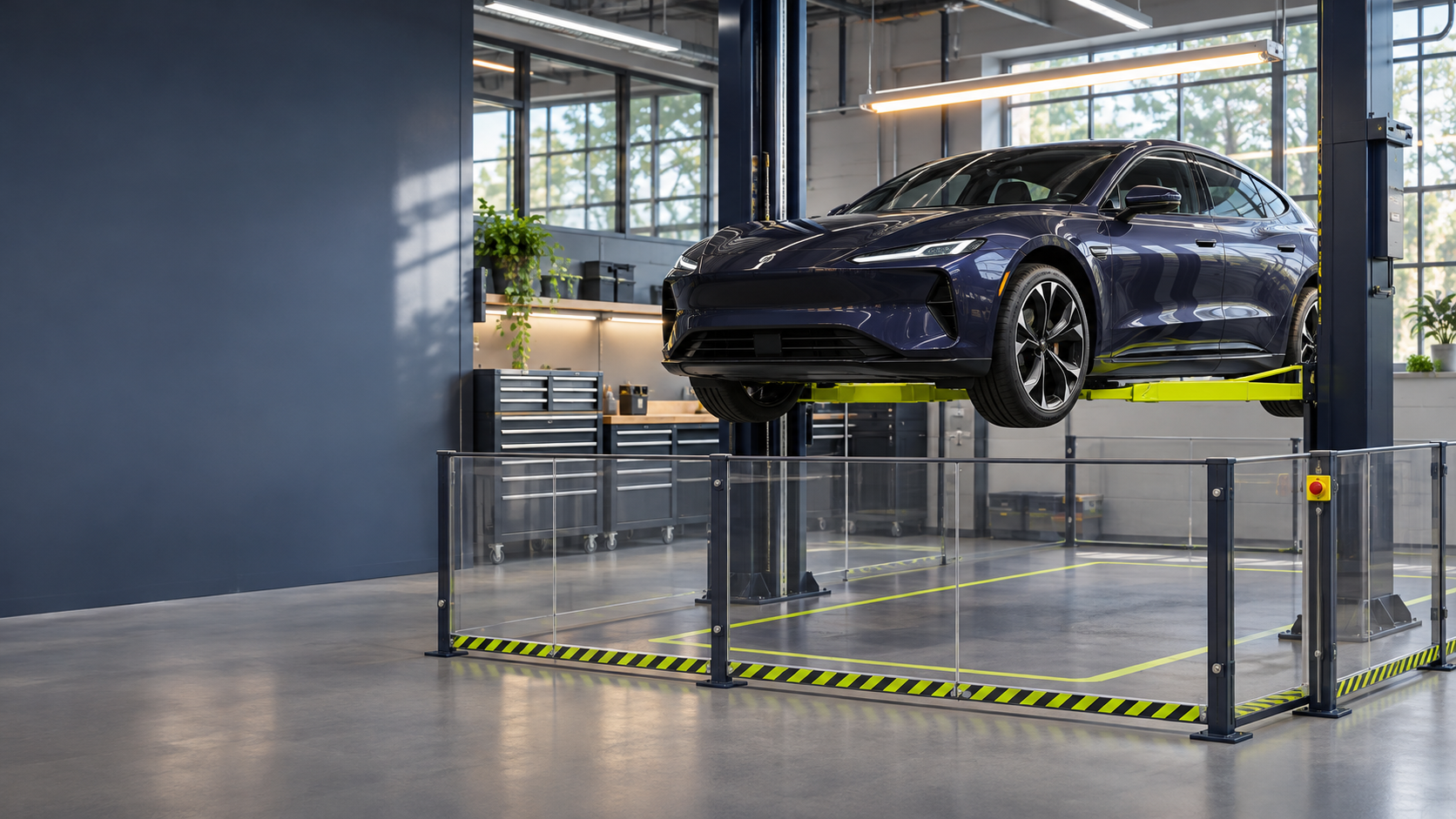
No one crosses the line without the training.
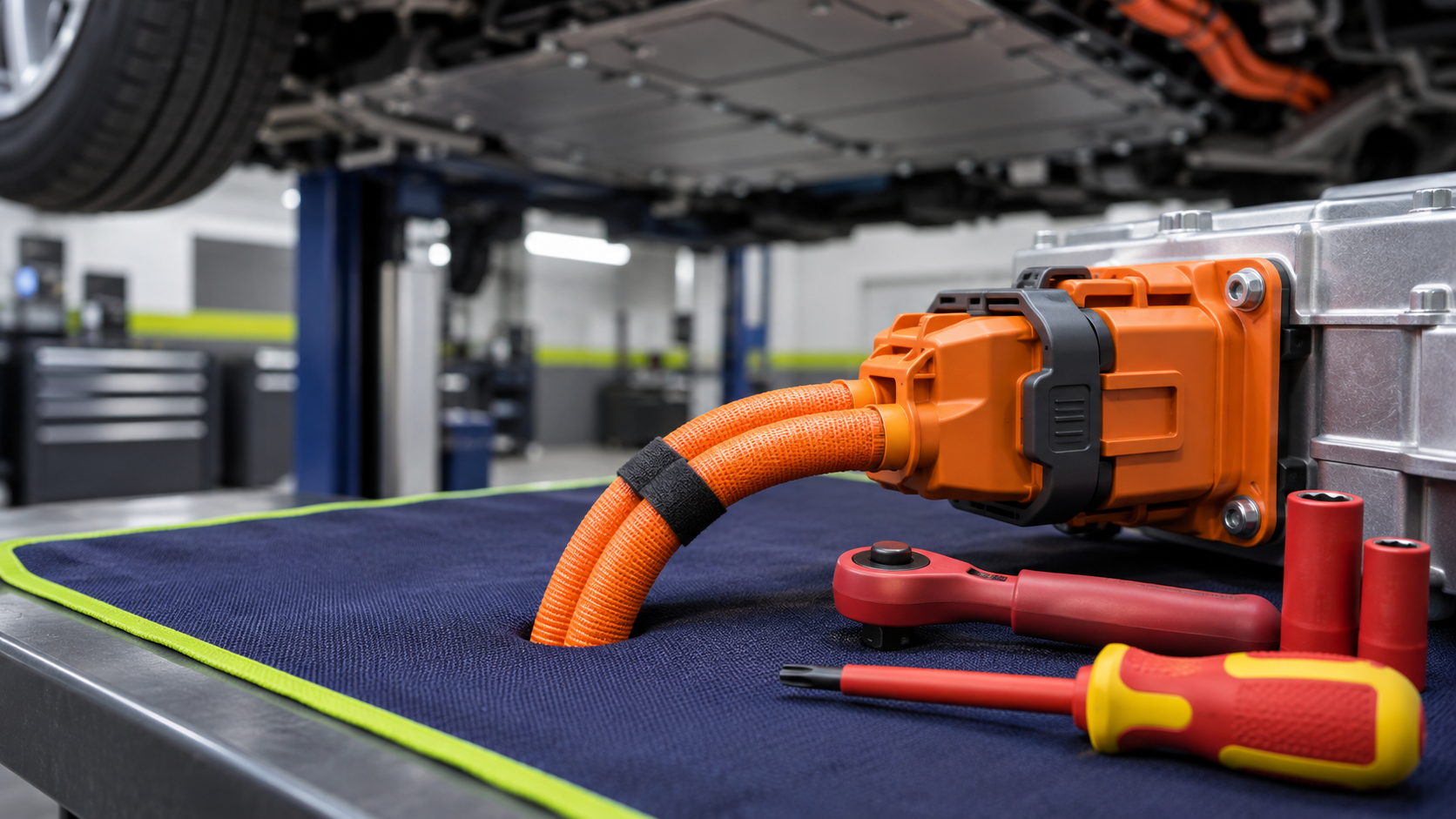
Every electric car is worked on inside a marked, barriered area by a technician trained for high-voltage systems, with insulated tools and the system made safe before any part comes off.
- Marked safe area
- Insulated tools
- System made safe first
- Data firstThe car's stored faults read before a guess
- Health in bandsNever a guaranteed figure
- Quoted firstNothing replaced without your yes
- Trained handsHigh-voltage work by trained technicians